
-
IFAK Survival First Aid Kit
Regular price From $175.79Sale price From $175.79 Regular priceUnit price per$0.00 -
Assurance Trauma First Aid Kit
Regular price $257.97Sale price $257.97 Regular priceUnit price per -
Major Bleed First Aid Kit
Regular price $169.97Sale price $169.97 Regular priceUnit price per -
Remote Area Survival First Aid Kit
Regular price $577.97Sale price $577.97 Regular priceUnit price per -

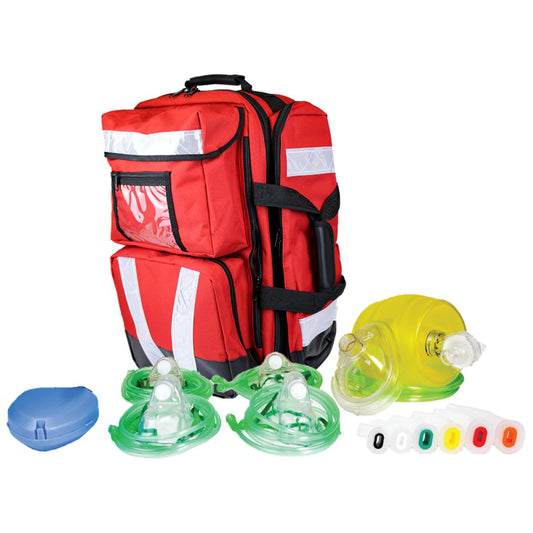 SALE
SALEOxygen First Aid Kit
Regular price $474.99Sale price $474.99 Regular priceUnit price per$502.23SALE


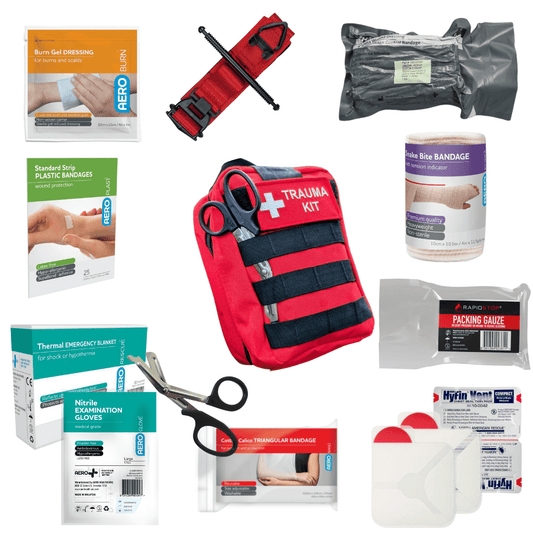

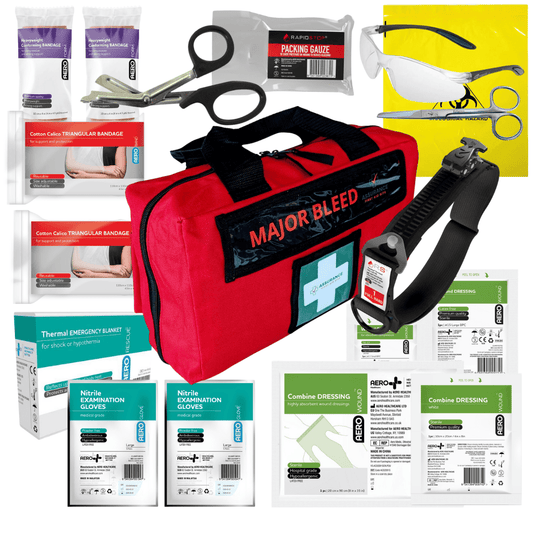

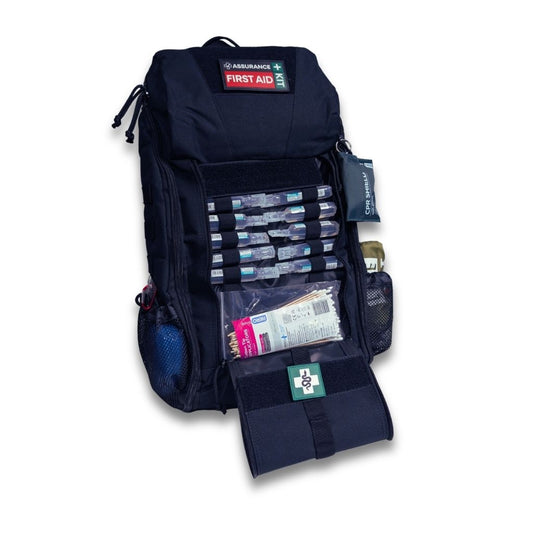

Trauma & Bleed Control Kits for Australian Workplaces and Beyond
Severe bleeding can happen anywhere. On a worksite. On the road. At a sporting event. At the beach. In a public space. When it does, the first few minutes matter — and most standard first aid kits are not equipped to respond.
This collection is designed specifically for major bleed response. Hospital-grade trauma equipment, organised for calm and rapid access. Packed by hand in Dubbo, NSW. Built for real emergencies — not compliance theatre.
Choose the Right Kit
For fixed placement in vehicles, worksites and public access locations. Comprehensive bleed control capability in a clearly organised, durable case.
Purpose-built self-aid trauma system for high-risk workers and remote environments. SOF-T tourniquet, blast bandage, wound packing gauze in a MOLLE-compatible pouch.
Individual tourniquets, trauma dressings, packing gauze, chest seals and haemostatic supplies for adding trauma capability to existing kits.
What Bleed Control Kits Include
No filler. No unnecessary items. Every piece is selected because it serves a specific function in a serious bleeding incident.
Standard First Aid Kit vs Bleed Control Kit
Understanding the difference matters — especially for high-risk workplaces conducting a WHS risk assessment.
| Capability | Standard First Aid Kit | Bleed Control Kit |
|---|---|---|
| Minor cuts & abrasions | ✓ | ✓ |
| Burns & eye wash | ✓ | ✗ Not the focus |
| Tourniquet | ✗ Rarely included | ✓ Core inclusion |
| Wound packing gauze | ✗ Not included | ✓ Included |
| Trauma pressure dressing | ✗ Not included | ✓ Included |
| Major bleed management | ✗ Not equipped | ✓ Purpose-built |
Under Safe Work Australia's First Aid in the Workplace Code of Practice, high-risk workplaces must provide first aid equipment appropriate to the hazards identified in their risk assessment. For environments where serious lacerations, crush injuries, amputation or penetrating wounds are realistic risks — including construction, mining, forestry, manufacturing, and agricultural operations — a standard first aid kit alone does not meet this requirement.
Trauma and bleed control capability should be part of the first aid provision for any workplace where the injury risk profile includes major bleeding. This is not an optional upgrade — it is what the Code of Practice requires when a proper risk assessment is conducted.
These kits are structured to support compliance for high-risk environments. Always conduct a site-specific risk assessment to confirm the correct equipment for your workplace. For broader workplace compliance guidance, see our WHS Workplace First Aid Kits collection →
Who Carries a Bleed Control Kit in Australia
Serious bleeding is not limited to high-risk worksites. These kits are carried by a broad range of Australians who understand that response time matters — wherever an incident occurs.
Frequently Asked Questions
What is a bleed control kit?
Are bleed control kits required for high-risk workplaces in Australia?
Is this only for workplaces?
Do these kits include a tourniquet?
What is the difference between a bleed control kit and an IFAK?
Is training recommended for bleed control kits?
Essential Reading
Last reviewed: March 2026
Not sure which kit is right for you? Answer three questions and we'll point you to the right one.
Find Your Kit