Workplace First Aid Kit Audit & Restock Checklist
Being tasked with "checking" the workplace first aid kits can be fiddly and boring. So we've built this checklist to make first aid kit restock fast and easy. Use it to make sure your work first aid kits are operational, compliant and ready for unexpected audits.
Join our WHS First Aid list and we'll send you the checklist free.
Join the WHS First Aid list — get the checklist free
We'll only email you about workplace first aid kit audit related topics — unsubscribe any time.
Most kits get bought off a shelf. That's the wrong instinct.
A compliant first aid kit isn't about grabbing whatever's cheapest at the hardware store — it's about matching contents to your actual workplace risk. Under the WHS Act, PCBUs must provide first aid equipment. What goes in the kit, and how much of it, should come from a proper risk assessment.
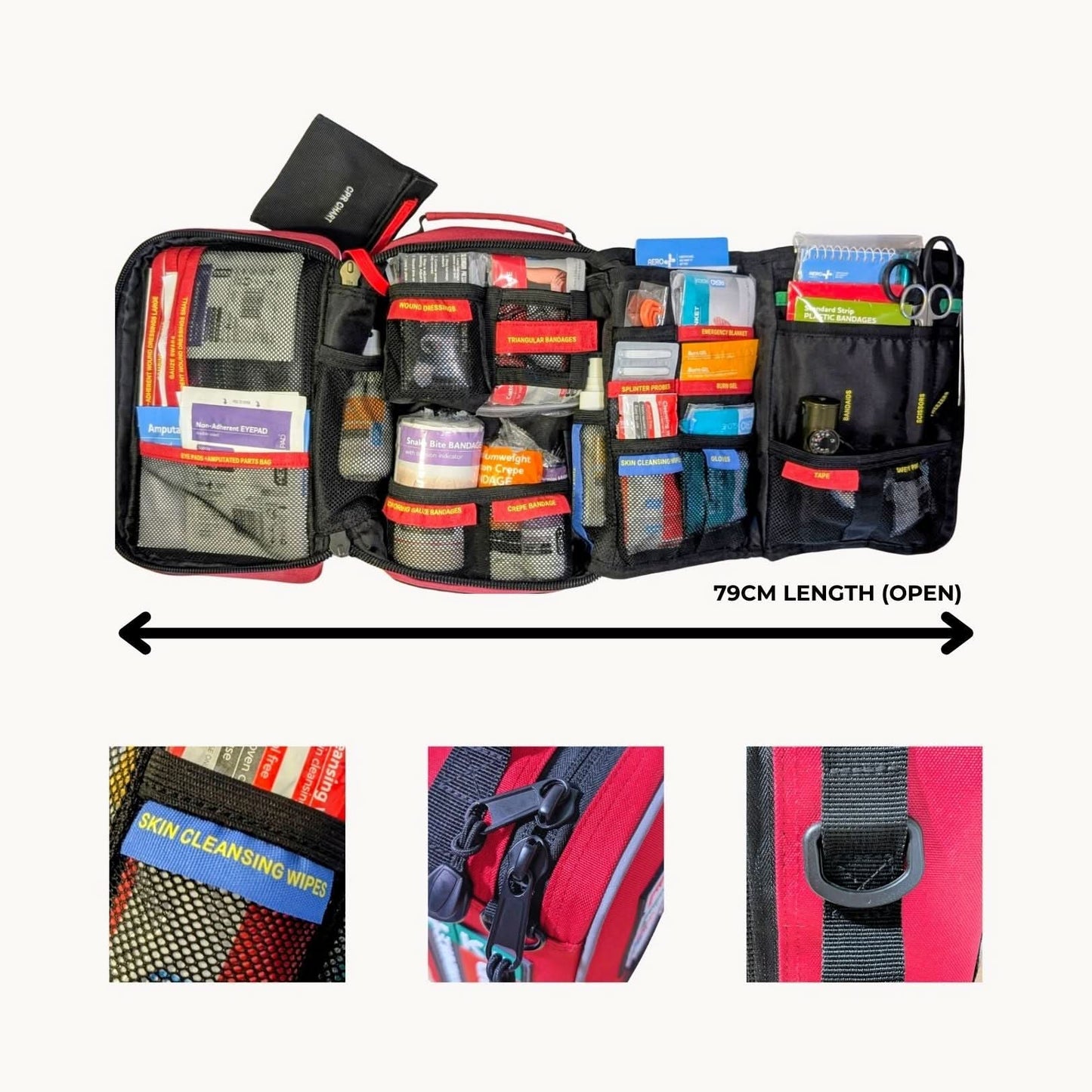
This checklist gives you a real starting point: the standard items, sensible quantities, and what to check before you're caught short with something expired or missing.
Full contents list
Every item a standard workplace kit needs, with the quantities to actually stock — not just a vague list of categories.
Risk-level pointers
Where a higher-risk or remote workplace should be stocking more than the baseline, and why.
Plain language
Written the way a trainer explains it face to face — not a compliance manual you need a dictionary for.
"I've spent 19 years teaching first aid in remote NSW. This checklist is the same one I'd hand a business owner in person — no fluff, no upsell."
Sam Kerr — First Aid Trainer, Assurance First Aid Kits
A few things people ask first
Is this checklist enough to make my workplace compliant?
It's a solid starting point covering standard contents and quantities. Full compliance still depends on your own risk assessment — this checklist tells you what to check, it isn't a substitute for doing it.
Do high-risk or remote workplaces need something different?
Yes — higher-risk sites generally need more first aiders and a broader kit. Treat this checklist as your baseline, not the finish line, if that's your situation.
Does this replace first aid training?
No. This is about what's in the kit, not who's trained to use it. Kits still need to be checked regularly and items replaced before they expire.
Get the checklist, stop guessing what's in the kit.
Join the WHS First Aid list — get the checklist free
We'll only email you about workplace first aid kit audit related topics — unsubscribe any time.
NSW Code of Practice First Aid in the Workplace