


Hyfin Vent Compact Chest Seal Twin Pack
Hyfin Vent Compact Chest Seal Twin Pack
Couldn't load pickup availability
In stock
- 48 Hour Dispatch
 Secure Pay Options
 FREE Shipping Over $149.99
Description
Description
A penetrating chest wound — from a fencing stake, a steel rod, high-speed machinery, or a vehicle accident — creates an open pathway for air to enter the chest cavity. Left unsealed, air accumulates around the lung with each breath, eventually collapsing it and shifting the heart. This is tension pneumothorax, and it kills. The correct first aid response is to seal the chest wound immediately with a vented chest seal — and to do that, the seal needs to be in the kit before the injury happens.
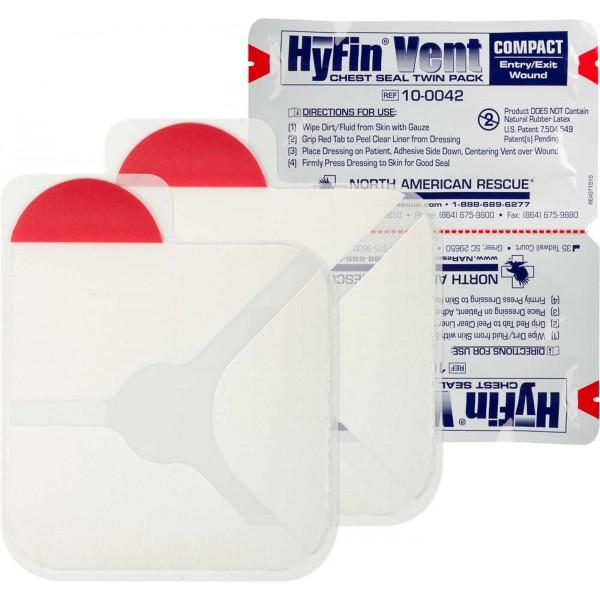
The HyFin Vent Compact Chest Seal Twin Pack includes two vented seals — one for the entry wound and one for the exit wound — with a three-channel vent system that prevents air entering the chest while allowing fluid drainage. Used by military medics and now a standard component in serious civilian trauma kits for remote Australian worksites, farms, and anyone whose work or location puts them far from hospital. Read our guide to major trauma first aid before an ambulance arrives — chest seal application is one of the critical interventions covered.
- Twin pack — one seal for entry wound, one for exit wound Penetrating chest injuries frequently have both an entry and an exit wound. Sealing only one allows air to enter through the other — both must be sealed for effective treatment. The twin pack provides both seals in a single purchase, correctly sized and matched for simultaneous application. This is the correct clinical standard for penetrating chest wound management — a single seal is not sufficient. Read why chest seal capability belongs in every major bleed and trauma module.
- Triple-channel vent system — prevents tension pneumothorax, allows fluid drainage The three-channel vent design allows air that has already entered the chest cavity to escape during exhalation while preventing atmospheric air from entering during inhalation. This vented design prevents the build-up that causes tension pneumothorax — a non-vented occlusive seal can accelerate this condition if air has already entered the cavity. The vents also allow blood and fluid to drain without breaking the seal.
- Medical-grade adhesive — sticks through blood, sweat, and chest hair A chest seal that does not adhere in real trauma conditions is ineffective. The HyFin's medical-grade adhesive is specifically formulated to maintain a secure seal on skin that is wet with blood or sweat and on hairy chest surfaces — the actual conditions present in a real trauma incident, not a clinical demonstration on dry clean skin. See how a chest seal fits into a correctly built Australian IFAK.
- Compact flat-pack — fits any IFAK, trauma bag, or remote area kit Flat-pack format sits in an IFAK, site trauma bag, vehicle kit, or 4WD pack without bulk. Compact enough to carry without a dedicated pouch. Read our guide to trauma-capable first aid kits for Australian trades and high-risk workplaces — the HyFin is the chest wound component that most standard kits are missing. For hands-on chest seal training, contact us on 02 6882 9056. Ships from Dubbo, NSW within 2 business days.
Description
Description
A penetrating chest wound — from a fencing stake, a steel rod, high-speed machinery, or a vehicle accident — creates an open pathway for air to enter the chest cavity. Left unsealed, air accumulates around the lung with each breath, eventually collapsing it and shifting the heart. This is tension pneumothorax, and it kills. The correct first aid response is to seal the chest wound immediately with a vented chest seal — and to do that, the seal needs to be in the kit before the injury happens.
The HyFin Vent Compact Chest Seal Twin Pack includes two vented seals — one for the entry wound and one for the exit wound — with a three-channel vent system that prevents air entering the chest while allowing fluid drainage. Used by military medics and now a standard component in serious civilian trauma kits for remote Australian worksites, farms, and anyone whose work or location puts them far from hospital. Read our guide to major trauma first aid before an ambulance arrives — chest seal application is one of the critical interventions covered.
- Twin pack — one seal for entry wound, one for exit wound Penetrating chest injuries frequently have both an entry and an exit wound. Sealing only one allows air to enter through the other — both must be sealed for effective treatment. The twin pack provides both seals in a single purchase, correctly sized and matched for simultaneous application. This is the correct clinical standard for penetrating chest wound management — a single seal is not sufficient. Read why chest seal capability belongs in every major bleed and trauma module.
- Triple-channel vent system — prevents tension pneumothorax, allows fluid drainage The three-channel vent design allows air that has already entered the chest cavity to escape during exhalation while preventing atmospheric air from entering during inhalation. This vented design prevents the build-up that causes tension pneumothorax — a non-vented occlusive seal can accelerate this condition if air has already entered the cavity. The vents also allow blood and fluid to drain without breaking the seal.
- Medical-grade adhesive — sticks through blood, sweat, and chest hair A chest seal that does not adhere in real trauma conditions is ineffective. The HyFin's medical-grade adhesive is specifically formulated to maintain a secure seal on skin that is wet with blood or sweat and on hairy chest surfaces — the actual conditions present in a real trauma incident, not a clinical demonstration on dry clean skin. See how a chest seal fits into a correctly built Australian IFAK.
- Compact flat-pack — fits any IFAK, trauma bag, or remote area kit Flat-pack format sits in an IFAK, site trauma bag, vehicle kit, or 4WD pack without bulk. Compact enough to carry without a dedicated pouch. Read our guide to trauma-capable first aid kits for Australian trades and high-risk workplaces — the HyFin is the chest wound component that most standard kits are missing. For hands-on chest seal training, contact us on 02 6882 9056. Ships from Dubbo, NSW within 2 business days.
FAQs
FAQs
-

24/7 Customer Support
-

Kits Built in Dubbo, NSW
-

Hospital Grade Supplies


