
Reviewed: 10 April 2026
🏠 Build a Kit That's Ready for This
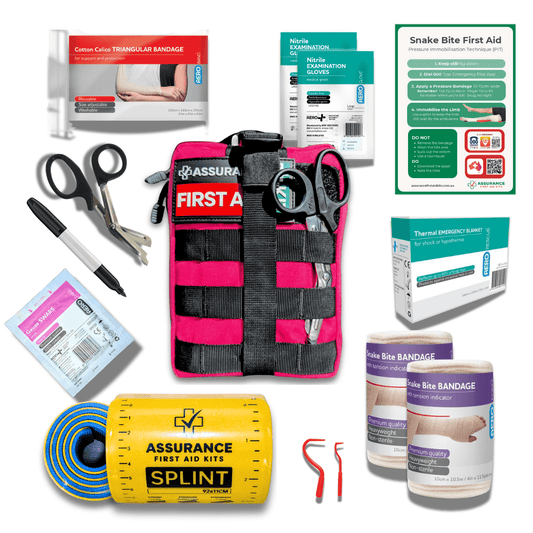
The Assurance Family First Aid Kit includes a personal medication space so you can keep honey sachets on hand — right where you need them. Packed locally in Dubbo for Australian families.
See the Family Kit → Find My Kit →🔴 Always Call 000 First
If you suspect a child has swallowed a button battery, call 000 immediately. The honey protocol is an interim measure only — it buys time, it does not fix the problem.
If you've already read our guide on button battery ingestion and what to do, you'll know that honey is now part of the official ANZCOR first aid guidelines. But a lot of parents ask the same follow-up question: why honey? It sounds unusual. And when your child's safety is on the line, "just trust us" isn't good enough.
So here is the actual science. What a button battery does inside the body, why the damage is so rapid, and exactly how honey interrupts that process. This is not a folk remedy — it is evidence-based interim care, and understanding why it works will help you act on it with confidence if you ever need to.
If you haven't yet read our guide on button battery ingestion: what to do, what not to do, and why honey is now in the guidelines, start there first.
What Australians Need to Know About Button Battery Chemistry
Australia's homes are full of button batteries. They power the remotes, toys, bathroom scales, key fobs, hearing aids, and greeting cards that are part of everyday life. Most parents know they are a choking hazard. Far fewer understand the chemical hazard — and that is the more serious one.
The injury a button battery causes when swallowed is not mechanical. It is electrochemical. And because it is invisible, painless in the early stages, and easily mistaken for a common illness, it is often not recognised until significant damage has already occurred.
In regional and rural Australia — where the drive to an emergency department might be an hour or more — understanding what is happening inside the body, and why interim first aid measures matter, is especially important. The honey protocol exists precisely because there is a window of time before the child reaches hospital. What happens in that window matters.
📍 Australian Guideline Context
ANZCOR Guideline 9.5.1 was updated in June 2025 to include specific first aid management of button battery ingestion, including the honey protocol. This followed a systematic review of experimental studies — in cadaver and animal models — and an observational study of patients aged 1 to 3 years treated with honey until battery removal, with no injury observed. The guideline is now the national standard for Australian first aiders and parents.
What Happens When a Button Battery Is Swallowed
When a button battery is swallowed by a young child, the most dangerous scenario is one where it lodges in the oesophagus — the narrow tube connecting the throat to the stomach. This is most likely with larger diameter batteries, particularly the CR2032, which is one of the most common button batteries found in Australian homes.
Once lodged, the battery does not need to be new or fully charged to cause harm. Even a flat or partially discharged battery generates enough electrical current when in contact with the moist tissue of the oesophagus to trigger a damaging chemical reaction.
Here is what that reaction looks like, step by step:
- The battery makes contact with moist oesophageal tissue. Saliva and tissue fluid act as a conductor, completing an electrical circuit between the positive and negative poles of the battery.
- An electrical current passes through the tissue. This current drives a process called electrolysis — the same basic chemistry that splits water into hydrogen and oxygen in a school science experiment.
- Sodium hydroxide is produced at the negative pole. Sodium hydroxide is a strongly alkaline chemical — the same compound found in industrial drain cleaners. It begins dissolving tissue on contact.
- The tissue pH rises rapidly. This alkaline environment accelerates cell death and tissue destruction in an expanding zone around the battery.
- Damage deepens with time. Experimental studies show oesophageal injury beginning within 15 minutes of ingestion. If the battery remains in place, the burn can penetrate through the oesophageal wall within hours, potentially reaching the aorta or trachea — with catastrophic consequences.
⚠️ Why Discharged Batteries Are Still Dangerous
Many parents assume a flat battery is a safe battery. It is not. Even a discharged button battery retains enough residual current to generate sodium hydroxide when in contact with tissue. The risk does not disappear when the device stops working. Treat all button batteries — new and used — as a serious hazard around children.
How Honey Interrupts the Damage
This is where the science becomes genuinely interesting. Honey works through two distinct mechanisms — and both are relevant to why ANZCOR included it in the national guidelines.
Mechanism 1: pH Neutralisation
Honey is mildly acidic, with a pH typically between 3.2 and 4.5. When swallowed, it coats the battery and the surrounding oesophageal tissue. This acidic coating partially counteracts the alkaline environment being created by the sodium hydroxide, reducing the pH rise that drives tissue destruction.
Think of it as chemistry doing what chemistry does — an acid meeting an alkali and reducing the damage on both sides.
Mechanism 2: Physical Insulation
Honey is highly viscous. When it coats the battery, it creates a physical barrier between the battery's poles and the surrounding tissue. This layer disrupts the electrical circuit — reducing the current that drives the production of sodium hydroxide in the first place.
Less current means less sodium hydroxide. Less sodium hydroxide means slower tissue destruction. Every minute that process is slowed is a minute closer to emergency care.
✅ What the Evidence Shows
The inclusion of honey in ANZCOR Guideline 9.5.1 followed a systematic review of the available evidence, including experimental studies in cadaver and animal models demonstrating reduced oesophageal injury, and an observational study of eight patients aged 1 to 3 years treated with honey until battery removal — with no injury observed in any patient. Jam was also identified as an effective alternative when honey is not available, with sucralfate suspension listed as a further option.
First Aid Steps — As per ANZCOR Guideline 9.5.1
Understanding the science is useful. But in an emergency, you need the steps. Here they are — clear and in order.
- Call 000 immediately. Do not wait for symptoms. Tissue damage can begin within 15 minutes.
- Give 10 mL (2 teaspoons) of honey every 10 minutes while waiting for the ambulance. Only for children over 12 months of age.
- If honey is unavailable, use jam. Sucralfate suspension is also listed in the ANZCOR guidelines as an alternative.
- Do not give anything else by mouth — no food, water, or other fluids.
- Do not induce vomiting.
- If the child has difficulty breathing or any sign of bleeding, give nothing by mouth — call 000 and keep the child calm and still.
- Keep the battery packaging. The number printed on it tells the hospital exactly what type and size of battery was swallowed — critical information for treatment.
The Science at a Glance
| What's Happening | The Chemistry | How Honey Helps |
|---|---|---|
| Battery lodges in oesophagus | Saliva completes the electrical circuit | Honey coats the battery, reducing contact with tissue |
| Electrical current generated | Electrolysis begins in surrounding tissue | Viscous layer partially insulates the poles, reducing current |
| Sodium hydroxide produced | Alkaline burn begins — pH rises rapidly | Mild acidity of honey partially neutralises the alkaline environment |
| Tissue destruction deepens | Can reach aorta or trachea within hours | Honey slows the rate of destruction — buying time for emergency care |
| Battery removed in hospital | Definitive treatment — honey is interim only | Evidence shows reduced injury when honey is given before removal |
What to Keep in Your Kit — and Where
A café honey sachet contains approximately 10 mL — exactly the right dose for the protocol. They are cheap, lightweight, and take up almost no space. There are two places every Australian family should keep them:
- In your first aid kit — so it is with your other emergency supplies when you need it
- In the drawer where you keep your batteries — so it is right there in the most likely moment of need
The Assurance Family First Aid Kit includes a personal medication space specifically designed to hold items like honey sachets or jam tubes alongside your standard kit contents. It is one of the few kits that accounts for this — because it was built by someone who actually knows the protocol.
| Kit | Personal Medication Space | Best For | Shop |
|---|---|---|---|
| Assurance Family First Aid Kit | ✓ Included — fits honey sachets or jam tubes | Families and homes with young children | Shop Now |
| Home use, general family | |||
| Car travel, day trips with kids |
Frequently Asked Questions
Does the honey actually stop the battery from causing damage?
Not completely — but it significantly slows the rate of damage. Honey reduces the electrical current passing through the tissue and partially neutralises the alkaline burn caused by sodium hydroxide. It is an interim measure designed to buy time until the child reaches emergency care, where the battery can be safely removed. It is not a treatment, but the evidence shows it meaningfully reduces injury when used correctly.
Why can't you give honey to babies under 12 months?
Honey can contain spores of Clostridium botulinum, the bacteria responsible for infant botulism. In children under 12 months, the digestive system is not yet mature enough to prevent these spores from germinating and producing toxin. For infants under 12 months who may have swallowed a button battery, call 000 immediately and give nothing by mouth.
Does the type of honey matter?
The ANZCOR guideline does not specify a particular type of honey. Standard supermarket honey — including the single-serve sachets widely available in Australia — is appropriate. The key properties are its viscosity and mild acidity, both of which are consistent across common honey varieties. Manuka honey is not required.
What if the battery has already passed into the stomach — does honey still help?
The honey protocol is specifically referenced in the context of oesophageal lodgement, which is the most dangerous scenario. If the battery has passed into the stomach, the risk profile changes — but you still need emergency care. Always call 000 or go to the nearest emergency department regardless of where you think the battery may be. Do not attempt to manage this at home.
Can I use Manuka honey or raw honey instead of regular honey?
Yes. Any honey is appropriate for the protocol — the mechanism relies on honey's pH and viscosity, both of which are present in all varieties including Manuka and raw honey. If standard honey sachets are what you have, use those. The most important thing is to give it promptly at the correct dose — 10 mL every 10 minutes — while calling 000.
The Science Is Clear — Now Make Sure You're Ready
Honey works because of chemistry, not coincidence. It slows an alkaline burn, disrupts an electrical current, and buys time for a child to reach the care they need. ANZCOR included it in the national guidelines because the evidence supports it — and because in those critical first minutes, a honey sachet could genuinely change an outcome.
Samantha suggests one of the following approaches — choose what suits your audience best:
✅ Option A — Direct Product
The Assurance Family First Aid Kit has a personal medication space built in — so you can add honey sachets before an emergency, not during one. Packed in Dubbo, built for Australian families.
Shop the Family Kit →🔍 Option B — Kit Finder
Not sure which kit is right for your home, your car, or your family? Answer three quick questions and we'll point you to the right one — packed in Australia, ready for real emergencies.
Find My Kit →⚡ Option C — Urgency
You now know the science. A honey sachet costs almost nothing and takes up almost no space. There is no good reason not to have one in your kit and one next to your batteries. Don't wait until you need it to wish you had it.
Shop the Family Kit → Find My Kit →References
- Australian and New Zealand Committee on Resuscitation (ANZCOR) — Guideline 9.5.1: First Aid Management of Poisoning, including Button Battery Ingestion (updated June 2025) — anzcor.org
- Sydney Children's Hospitals Network — Button Battery Safety — schn.health.nsw.gov.au
- Royal Children's Hospital Melbourne — Kids Health Information: Swallowed Objects — rch.org.au
- Better Health Channel (Victoria) — Poisoning: First Aid — betterhealth.vic.gov.au
- Australian Government Department of Health — Child Safety and Injury Prevention — health.gov.au
- SafeWork Australia — First Aid in the Workplace — safeworkaustralia.gov.au