SALE Out of Stock

Major Bleed First Aid Kit

Major Bleed First Aid Kit

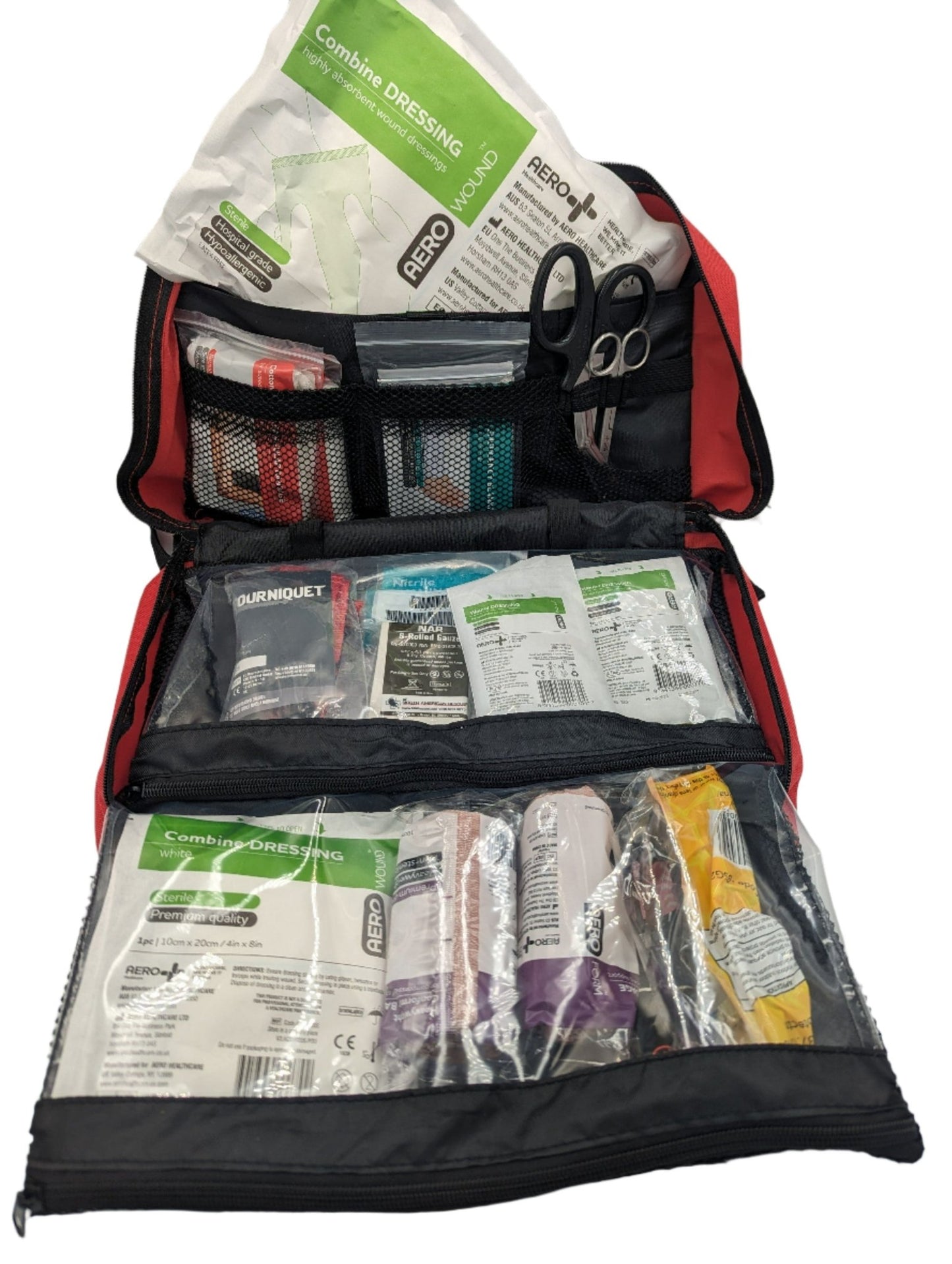
AS2675 Compliant high risk module - major bleed first aid kit to supplement basic workplace first aid.
Regular price $169.99
Sale price $169.99 Regular price
  • Trade
  • Vehicle
  • Major Bleed
  • Priority Shipping buy_online  first_aid_kit_built_in_australia48 Hour Dispatch
  • Secure Pay Options
  • Fast ShippingFree Shipping Over $149.99 until June 30

High Risk Worksite First Aid Kit.

Add this module to your exisiting trade or vehicle first aid kit, to meet compliance obligations on high risk work sites.

✅Packed in Australia to Control Major Bleeding

✅Suits High Risk Work Sites

✅Clinical Grade First Aid Supplies

✅Workplace Compliant

Kit Includes

  • 1 x rapid stop tourniquet
  • 1 x packing gauze
  • 1 x trauma shears 15cm
  • 1 x clinical waste bag
  • 1 x clear safety glasses
  • 2 x pairs nitrile gloves
  • 1 x sterile combine 20 x 90cm
  • 1 x scissors stainless steel 13 cm
  • 2 x heavy weight bandage 10cm x 4m
  • 1 x thermal blanket
  • 2 x calico triangular bandage
  • 1 x no #15 wound dressing
  • 1 x no #14 wound dressing
View full details

Everything you need to know...

Description

A standard first aid kit is not designed to stop a life-threatening bleed. This one is. The Major Bleed First Aid Kit is used alongside your existing workplace kit — not instead of it — to give your site the capability to respond to traumatic blood loss before an ambulance arrives.

Uncontrolled bleeding from a limb is one of the leading preventable causes of workplace death in Australia. Most standard WHS kits carry no tourniquet and no wound packing gauze. This kit has both.

  • Built for high-risk worksites where traumatic amputation, crush injury, or major laceration is a real risk If your workplace risk assessment identifies machinery, cutting tools, height work, or vehicles as hazards — a standard compliance kit is not enough on its own. Read our construction first aid kit guide to understand when a standard kit stops being sufficient and a bleed control kit becomes necessary.
  • One commercially prepared tourniquet plus supplies to create four improvised tourniquets Apply as high on the limb as possible, note the time, and do not remove until emergency services arrive. Response time in a major bleed scenario is the difference between survival and death — having the right equipment within arm's reach on site is what this kit exists for.
  • Wound packing gauze and large sterile combine dressing — not just bandages During our own research we found many products claiming to be bleed kits that contained neither a tourniquet nor wound packing equipment. Wound packing gauze is used for deep wounds and cavities where direct pressure alone cannot control bleeding. Read our guide on what a major bleed module should actually contain before you buy anywhere else.
  • Packed and inspected by hand in Dubbo, NSW — weather-resistant bag, 36 x 18 x 12cm, 1.3kg Compact enough to carry, built to be opened under pressure. Every item checked before it leaves the workshop. Check this kit after every use and at minimum every 12 months — read our kit maintenance guide for the correct WHS audit and restock process.
Used in conjunction with a standard trades and construction first aid kit for high-risk worksites. If your risk assessment identifies a serious bleeding risk — this is what your site needs alongside its compliance kit. Not sure which combination is right for your site? Use our kit finder or browse the full WHS workplace range. Refill packs are available after an incident — restock promptly and check at least annually.

Workplace Compliant

This first aid kit is designed to align with the High Risk Worksites described in the Model Code of Practice: First Aid in the Workplace, published by Safe Work Australia.

You can view the official Code here:
Safe Work Australia – Model Code of Practice: First Aid in the Workplace
https://www.safeworkaustralia.gov.au/doc/model-code-practice-first-aid-workplace

This Code provides practical guidance on how businesses can meet their duties under the Work Health and Safety (WHS) laws.

What legal framework do workplace first aid kits fall under?

Workplace first aid requirements are governed by:

Safe Work Australia
https://www.safeworkaustralia.gov.au

Under the national framework:

  • Work Health and Safety Act
  • Work Health and Safety Regulations
  • Model Code of Practice: First Aid in the Workplace

Each state and territory regulator enforces WHS laws locally. These include:

Employers must comply with their relevant state or territory regulator.

What does the Code of Practice require?

The Model Code of Practice requires businesses to assess:

  • The type of work being carried out
  • The hazards present
  • The size and location of the workforce
  • The distance from emergency medical services
  • The number and location of first aid kits required
  • The need for trained first aiders

It also requires first aid kits to:

  • Contain appropriate and accessible equipment
  • Be regularly maintained and restocked
  • Be suitable for the specific workplace risk profile

Our workplace kits are structured to support these requirements.

They include hospital-grade consumables selected to manage common workplace injuries such as:

  • Cuts and lacerations
  • Burns
  • Eye injuries
  • Sprains and strains
  • Minor to moderate bleeding
  • Shock and exposure

Are your vehicle kits compliant for work vehicles?

Yes. Our vehicle kits are designed to align with WHS expectations for mobile workers, including:

  • Trades
  • Field service technicians
  • Construction crews
  • Remote or regional staff

They are compact, accessible, and structured to meet vehicle first aid requirements under WHS guidance.

For official vehicle guidance, refer to your relevant state WHS authority listed above.

Is buying your kit enough to be compliant?

A compliant kit is part of compliance — but not the entire requirement.

Under WHS laws, employers must:

  • Conduct a workplace risk assessment
  • Provide appropriate first aid facilities
  • Ensure trained first aiders are available where required
  • Maintain and review first aid arrangements regularly

Our kits are built to support compliance. Final responsibility for meeting WHS obligations remains with the employer.

How often should workplace first aid kits be checked?

The Model Code of Practice recommends regular inspection to ensure:

  • No expired items
  • Used items replaced promptly
  • The kit remains suitable for current risks

We recommend scheduled checks at least every 3–6 months, or more frequently in higher-risk environments.

Can kits be customised for higher-risk workplaces?

Yes.

The Code requires that first aid equipment reflect the nature of workplace hazards.

For higher-risk industries, businesses may require additional modules such as:

  • Burn treatment supplies
  • Trauma or major bleed support
  • Snake bite kits for regional worksites

This approach supports real-world capability — not just minimum compliance.

If you'd like, I can also:

  • Add a formal compliance disclaimer block at the bottom
  • Create a shortened compliance summary for product pages
  • Or write a fully referenced compliance landing page designed for trade buyers

Tell me where this will sit on the site and I’ll refine it further.

FAQs

Does this kit replace my standard WHS first aid kit?

No. The Major Bleed First Aid Kit is used alongside your existing workplace first aid kit — not instead of it. A standard WHS kit is not designed to stop life-threatening blood loss. This kit provides the additional bleed control capability your site needs when the risk assessment identifies traumatic injury as a hazard.

What is included in this kit?

One commercially prepared tourniquet, wound packing gauze, large sterile combine dressing, and enough standard supplies to create four improvised tourniquets. Housed in a weather-resistant bag with waistband, 36 x 18 x 12cm, weighing 1.3kg.

What is wound packing gauze used for?

Wound packing gauze is used to pack deep wounds and cavities where direct pressure alone cannot control bleeding — particularly relevant for serious lacerations, puncture wounds, and traumatic injuries involving machinery or cutting tools.

When should a tourniquet be applied?

Apply a tourniquet when direct pressure is not controlling life-threatening bleeding from a limb — particularly in cases of traumatic amputation, crush injury, or major laceration. Apply as high on the limb as possible, note the time of application, and do not remove until emergency services arrive.

What worksites should carry this kit?

Any worksite where the risk assessment identifies a risk of traumatic blood loss — machinery, cutting tools, height work, or vehicles. Particularly important on construction sites, civil and infrastructure projects, and remote worksites where ambulance response times are longer.

How often should this kit be checked?

After every use and at minimum every 12 months. Restock promptly after an incident. Refill packs are available at assurancefirstaidkits.com.au.