


First Aid Kit Restock 5 person
First Aid Kit Restock 5 person
Couldn't load pickup availability
 48 Hour Dispatch
 30 Day Easy Returns
 Free Shipping over $199.99


Kit Includes
Kit Includes
Description
Description
The right restock for smaller kits — work vehicles, utes, boats, small site offices, and any bag or box rated for up to five persons. The First Aid Kit Restock 5 Person is a complete Type B compliant refill pack matched to the First Aid Code of Practice 2019, WorkSafe approved and workplace compliant, with no bag included.
If your vehicle kit, trade kit, or small workplace kit is due for a restock and you already have the bag, this is the pack. Same category of items as the 10-person restock, scaled to Type B quantities — everything checked, listed, and packed by hand before it leaves Dubbo.
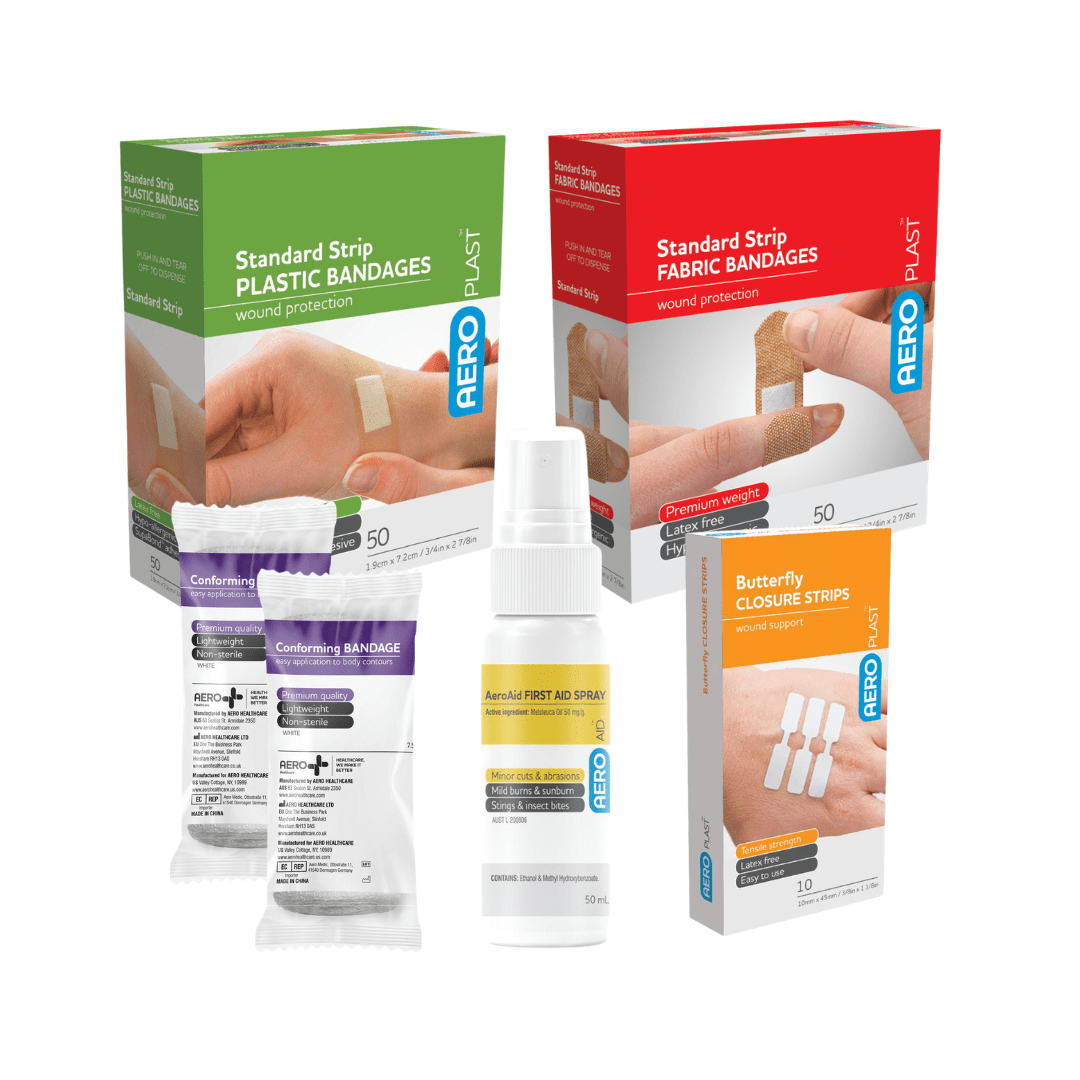
- Wound care, dressings, and bandaging — Type B quantities 25-pack band-aids, low-adherent pads in two sizes, sterile combine dressing, wound dressing #14, conforming gauze bandages in two widths, crepe bandage, hypoallergenic tape, triangular bandage, safety pins, tweezers, stainless steel scissors, and splinter probes. Scaled to the Type B specification for up to five persons — the correct quantities for a vehicle or small workplace kit, not oversupplied for a count.
- Burns, eye injuries, and emergency response Three burn gel sachets, two oval eye pads, four eyewash and wound irrigation ampoules, instant ice pack, and emergency thermal blanket. The burn gel and eyewash ampoules are the items most commonly skipped in generic vehicle restocks — they are included here as standard because the injuries that require them do not skip vehicles.
- Infection control and hygiene Two pairs nitrile gloves, disposable face shield sachet, six alcohol-free cleansing wipes, six povidone iodine swabs, two gauze swabs, and amputated parts bags. TGA-approved across all consumable items. Nitrile gloves rather than latex — relevant for trade and field environments where latex sensitivity may not be known in advance.
- First aid reference materials and incident documentation First aid leaflet with CPR flowchart, content list, and first aid notebook and pen. In a vehicle or remote work setting, the notebook is critical — incident time, actions taken, and patient details need to be recorded accurately at the scene, not reconstructed later from memory.
FAQs
FAQs

Who are you buying from?
My name is Sam Kerr, here with my partner and co-founder Dan Curtis.
We are here to help you get your first aid set up right, for all scenarios.
Reach out if you need any guidance.
