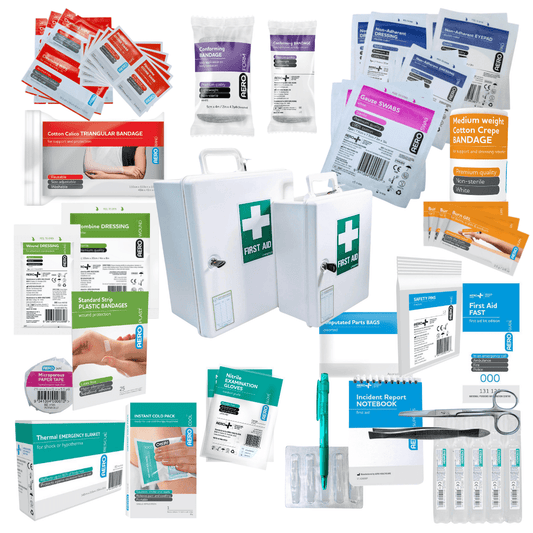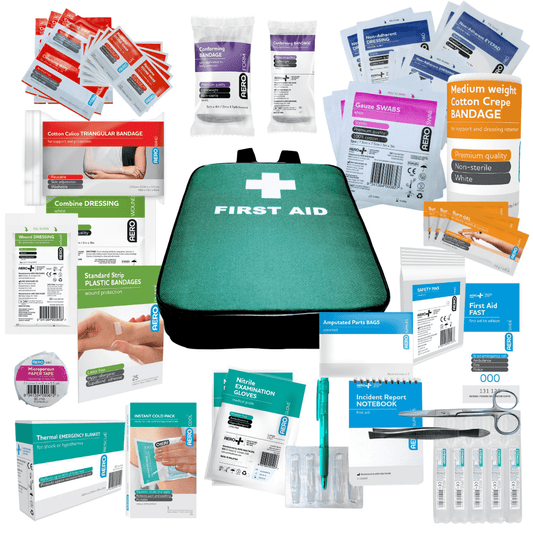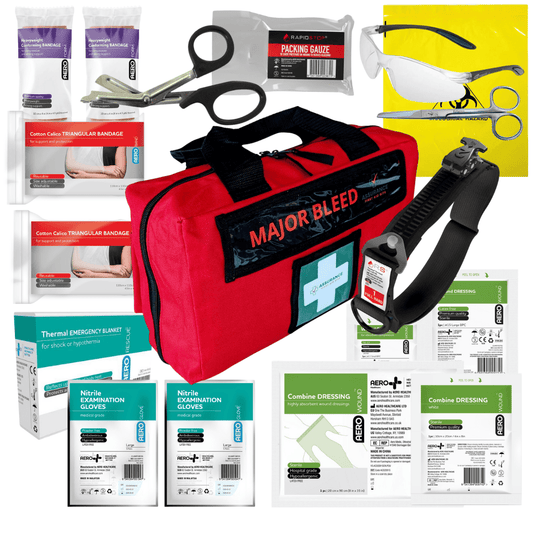
Collection: WHS Workplace Compliant First Aid Kits


Workplace First Aid Kits Built for Australian WHS Requirements

For Australian employers, providing appropriate first aid equipment isn't optional — it's a legal obligation under the Model Work Health and Safety Regulations. The correct kit for your business depends on your workforce size, the nature of your operations, and a workplace risk assessment.

Every kit in this collection is designed using the First Aid in the Workplace Code of Practice and informed by Safe Work Australia guidance. Packed by hand in Dubbo, NSW with hospital-grade supplies and organised for fast response.

Designed by a First Aid Trainer — Not a Warehouse Samantha Kerr, founder of Assurance First Aid Kits, has 19 years of hands-on first aid training experience and a background as a Patient Transport Officer in Outback NSW. These kits are built from real-world emergency knowledge — not assembled from a catalogue.

Find the Right Kit for Your Workplace

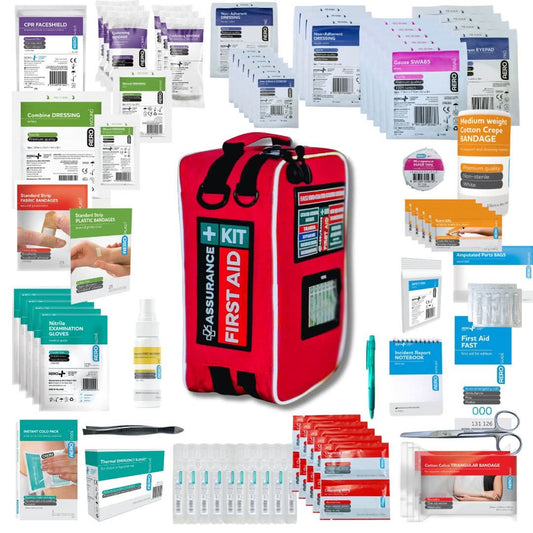
Offices & Retail Small Workplace Kit

For low-risk environments with smaller teams. Offices, retail, studios, and small service businesses. Compact, compliant, and clearly organised.

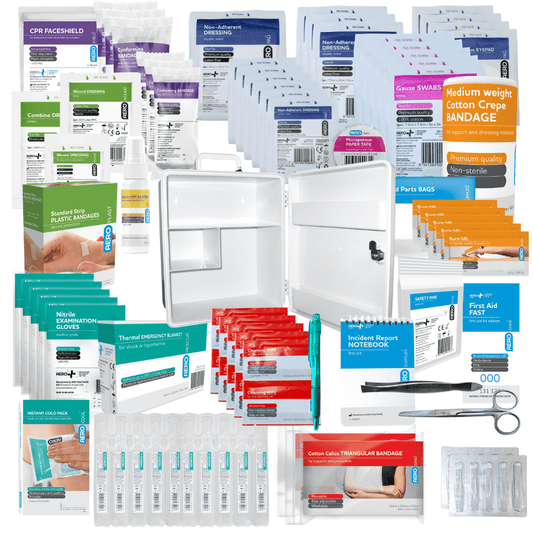
Larger Teams Workplace Kit — 10 to 25 Person

For medium-sized workplaces with higher worker numbers. Expanded quantities and broader coverage to meet Safe Work Australia recommendations.

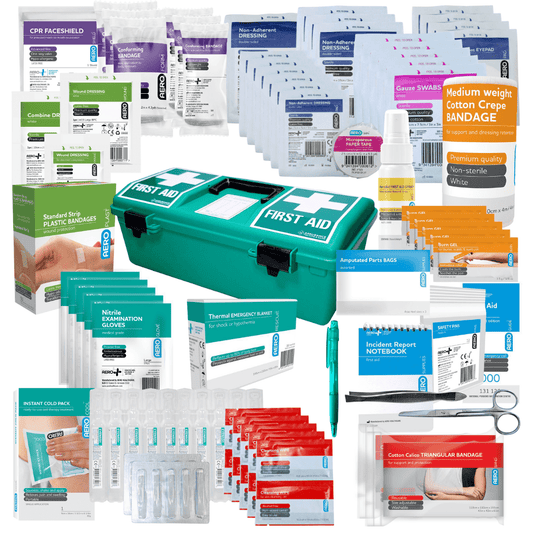
High Risk Trades & Construction Kit

For higher-risk environments including construction, manufacturing, and field services. Trauma capability and expanded wound management included.

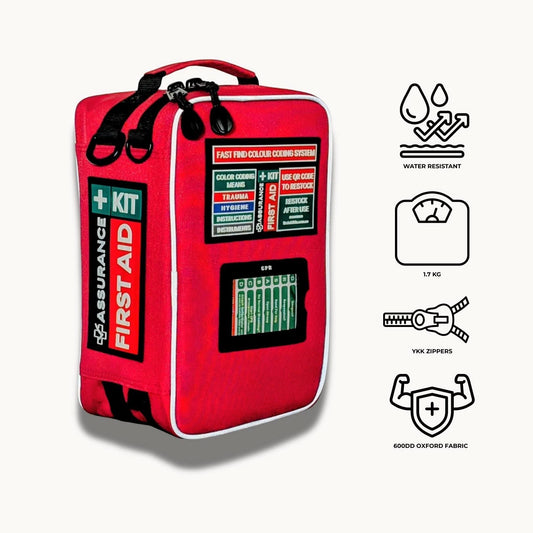
Mobile Workplaces Vehicle & Mobile Kit

For work vehicles, mobile teams, and NDIS support worker vehicles. Compact, vehicle-ready, and WHS-aligned for mobile workplace obligations.

NDIS Providers & Support Workers

NDIS registered providers and support workers operating in community or mobile settings have specific workplace health and safety obligations. A work vehicle used for NDIS support work is considered a mobile workplace under Australian WHS legislation — appropriate first aid equipment is required.

Assurance workplace kits are used by NDIS providers, support worker vehicles, and community care teams across NSW and nationally. They meet the first aid equipment requirements expected of registered providers and are organised for use in community settings where fast, calm response matters.

Read: What First Aid Items Can I Buy with NDIS Funding? →

What Australian WHS Compliance Actually Requires

Workplace first aid compliance in Australia is determined by risk assessment, not by purchasing the most expensive kit on the shelf. The Safe Work Australia First Aid in the Workplace Code of Practice sets out the framework. The key obligations are:

  • Provide first aid equipment appropriate to the hazards and risks of your workplace
  • Ensure the number of kits reflects your workforce size and site layout
  • Place kits in accessible, clearly signed locations throughout the workplace
  • Assign a responsible person to manage kit maintenance and restocking
  • Check and restock kits after every incident and at minimum annually
  • Ensure workers know where kits are located and how to access them
Important — WHS Compliance Is Risk-Based, Not Kit-Based No kit automatically makes a workplace compliant. Compliance comes from conducting a proper risk assessment and selecting equipment that matches your specific workplace hazards. These kits are designed to support that process — not replace it.

Free Compliance Resources

Staying compliant doesn't stop at buying a kit. These free resources help you maintain coverage, meet signage requirements, and keep your workplace audit-ready.

Frequently Asked Questions

What first aid kit do I need for my workplace in Australia?
Under Australian WHS legislation, the correct kit depends on your workforce size, the nature of your operations, and a workplace risk assessment. Low-risk environments such as offices typically require a smaller kit, while higher-risk workplaces need expanded trauma capability and greater quantities. Safe Work Australia's First Aid in the Workplace Code of Practice provides the framework for making this determination.
Are these workplace first aid kits WHS compliant?
These kits are designed using the First Aid in the Workplace Code of Practice and Safe Work Australia guidance to support compliance for low to medium-risk workplaces. Always conduct a risk assessment specific to your environment to confirm the correct kit for your business.
Are these kits suitable for NDIS providers and support workers?
Yes. These kits are suitable for NDIS providers, support worker vehicles, and community care settings operating as mobile workplaces. They meet the first aid equipment requirements expected of NDIS registered providers under Australian workplace health and safety obligations.
How often should workplace first aid kits be checked?
Under WHS best practice, workplace first aid kits should be inspected after every incident and audited at minimum every 12 months to ensure supplies are in date and quantities remain adequate for your workforce. SafeWork Australia recommends assigning a responsible person to manage kit maintenance and restocking.
Do I need first aid signage in my workplace?
Yes. The First Aid in the Workplace Code of Practice requires that the location of first aid equipment is clearly identified with signage. Assurance First Aid Kits provides free printable workplace first aid signs available for download — A4 and A5 formats included.
Packed in Dubbo, NSW  ·  Dispatched within 48 hours  ·  Compliance isn't complicated. It's structured.
Last reviewed: March 2026

Not sure which kit is right for you? Answer three questions and we'll point you to the right one.

Find Your Kit

Need a bit more information?

FAQs

Do any supplies in the first aid kits expire?

Where required an expiry date is on the individual item.

‘Shelf life’ is the term or period during which a component remains suitable for the intended use. An expiry date is the termination of shelf life, after which a percentage of the component, e.g., medical devices, may no longer function as intended.

See below for the expiry dates of our first aid kits contents that have an expiry:

  • Adhesive dressings: 3 years
  • Combine dressing: 5 years
  • Cotton gauze swabs: 5 years
  • Eye pads: 5 years
  • Hydrogel: 2 years
  • Hydrogel dressing: 5 years
  • Non adherent wound dressings: 5 years
  • Saline: 5 years
  • Skin cleaning wipes: 2 years
  • Splinter probes: 5 years
  • Wound closures: 2 years
  • Wound dressings: 5 years

What’s the first thing I should do if someone is bitten by a snake?


Call 000 immediately. Keep the person still and calm. Apply a pressure immobilisation bandage and immobilise the limb. Never wash, cut, or suck the bite.

How do the tension indicator bandages work?


They have printed rectangles that turn into squares when the bandage is tight enough. No guesswork. No second-guessing

Are snake bites a risk in winter?


Yes. Australian snakes don’t hibernate—they enter brumation. They’re slower, but still active, especially on warm days or when disturbed.

How long do I have to get help after a snake bite?


There’s no exact timeframe—it varies by snake and person. But the right first aid (like pressure immobilisation) buys you time until help arrives.

Can I use this snake bite kit for spider bites or other emergencies?


Absolutely. It’s also suitable for funnel-web spiders, blue-ringed octopus stings, sprains, fractures, and bleeding.

What makes Assurance kits better than cheaper first aid kits?


They include tension indicator bandages, clear instructions, and high-quality gear built for real Australian conditions—no filler items or cheap imports.

Which snake bite kit is right for me?

Assurance Sanke Bite Kit: Lightweight kit for hikes and vehicles

Assurance Snake Bite Plus: Family/pet-friendly for homes and holidays


Assurance Snake Bite Max: Full gear for broadest range of venomous and non venomous bites and stings. Suits families, outdoor leaders or first responders


Can I use this snake bite kit on children or pets?

Yes, absolutely. Just follow the included step-by-step instructions carefully. These kits are used in schools and by pet owners across Australia.

What are the signs of a venomous bite?


You might see puncture marks, nausea, blurred vision, difficulty breathing, or collapse. But not always—some symptoms are delayed.