
Weighted Toys, Fidget Spinners and Comfort Objects: What to Pack When You Leave Home with a Neurodiverse Child
Reviewed: 10 April 2026
🏠 A Kit You Can Customise for Your Child
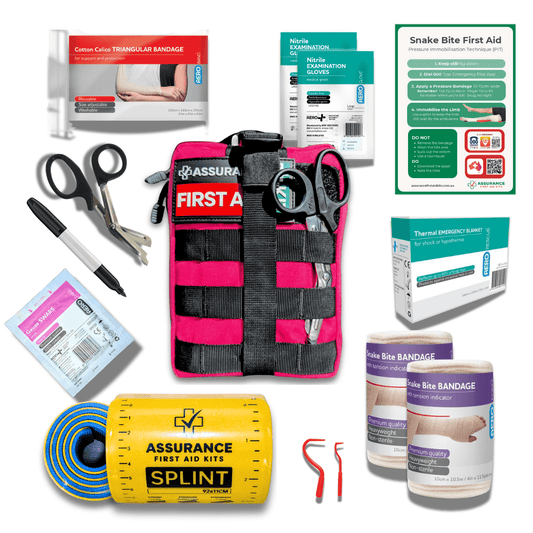
The Assurance Family First Aid Kit includes a personal medication space where you can add your child's regulation tools, All About Me card, and specific medications alongside standard supplies. Packed locally in Dubbo for Australian families.
See the Family Kit → Find My Kit →🔴 Always Call 000 in a Medical Emergency
Regulation tools are interim support — they help you deliver first aid, not replace it. In any serious medical emergency, call 000 immediately.
Most neurodiverse children are at their most regulated at home. Their environment is familiar, their tools are within reach, their routine is intact. The moment you leave — for a family barbecue, a bush walk, a long car trip, a visit to grandparents in a different town — all of that scaffolding disappears. And that is exactly when the risk of a medical or sensory emergency is highest.
For parents of autistic children, children with ADHD, or children with sensory processing differences, leaving home without the right regulation tools is not just inconvenient. In a genuine emergency, it can mean the difference between a child who can be helped and a child who is too overwhelmed to cooperate with treatment at all.
This guide covers what to pack, why each item matters in a first aid context, and how to make sure every adult who might be in an emergency with your child knows what to do with those tools. It links directly to our anchor guide to first aid for neurodiverse children — if you haven't read that yet, start there.
What Australians Need to Know About Neurodiverse Children Away from Home
Australia's National Autism Strategy 2025–2031 explicitly recognises that autistic Australians face barriers to accessing services and participating safely in community life — barriers that are compounded when they are in unfamiliar environments. For children, this is not an abstract policy concern. It plays out on every road trip, every camping weekend, every school excursion, and every visit somewhere new.
Unfamiliar environments remove the predictability that neurodiverse children rely on to stay regulated. New sounds, new faces, new smells, different lighting, disrupted routines — each one adds load to a nervous system that may already be running close to its threshold. Add a sudden medical emergency on top of that load, and you have a child who is simultaneously dealing with physical pain or fear and a completely dysregulated sensory environment.
📍 The Regional Australia Factor
For families in regional and rural NSW — Dubbo, Tamworth, Orange, Broken Hill, and the countless towns and properties beyond them — leaving home often means leaving the familiar therapists, the known school staff, and the GP who understands your child. In an emergency an hour from the nearest hospital, you are the first responder. Your child's regulation tools and their All About Me card may be the most important things in your bag.
The good news is that preparation is straightforward. The tools that help your child regulate at home are the same tools that help them cooperate with first aid treatment away from home. You just need to make sure they travel.
Why Regulation Tools Matter in a First Aid Context
It is worth being clear about why this matters beyond general comfort. Regulation tools are not just nice-to-haves for a neurodiverse child away from home. In a first aid emergency, they are functional clinical tools.
The Autism CRC's National Guideline for Supporting Autistic Children (2023), approved by the National Health and Medical Research Council, identifies sensory regulation as a core support need for autistic children across all environments — not just at home or in therapy. When a child's sensory needs are not met, their capacity to process information, follow instructions, and tolerate physical intervention drops significantly.
In a snake bite scenario, a child who is in sensory shutdown cannot cooperate with pressure immobilisation bandaging. In a burn scenario, a child in full meltdown cannot hold still for wound cooling. The regulation tool is what creates the window in which treatment becomes possible.
✅ The Core Principle
Whatever your child uses to regulate at home travels with them. Non-negotiable. It goes in the bag before the snacks do. The one time you leave it behind is the one time you will need it most.
What to Pack — The Regulation Toolkit
Noise-Cancelling Headphones
Auditory overload is one of the most common and fastest-acting sensory triggers for neurodiverse children. Sirens, crying, a crowd of concerned adults, traffic, wind — a medical emergency generates exactly the kind of unpredictable noise that is most dysregulating. Noise-cancelling headphones reduce that load before any treatment begins.
These go on first. Before you touch the child. Before you start explaining what happened. Headphones on, then everything else follows.
A compact, foldable pair lives in the bag alongside the first aid kit. If your child already uses specific headphones that they are comfortable with, those are the ones that travel — not a spare unfamiliar pair.
Weighted Toy or Lap Pad
Weighted items work by providing proprioceptive input — deep pressure through muscles and joints that signals the nervous system to down-regulate. Paediatric occupational therapists at NAPA Centre Australia describe this input as functioning like a firm hug for the nervous system, promoting calm and groundedness in children who are overwhelmed.
In a first aid context, a weighted toy in the opposite hand to the injury site gives the child something to grip during treatment, reduces the urge to push away or interfere with bandaging, and provides a constant proprioceptive anchor while the treatment is happening.
A small weighted stuffed toy — the kind that fits in a day bag — is ideal. It does not need to be large or heavy to be effective. Whatever your child already responds to at home is the right choice.
Fidget Spinner or Sensory Toy
Fidget tools serve a different but complementary function to weighted items. They occupy the hands and provide a repetitive, predictable sensory input that the child can control — which is particularly valuable when everything else in the environment feels out of control.
In a first aid scenario, a fidget spinner or small sensory toy in the child's hands reduces interference with treatment. A child whose hands are occupied with something familiar is less likely to reach for a wound, pull at a bandage, or push away the person treating them.
Small, flat, and lightweight — these are easy to tuck into any bag or kit pocket and cost very little.
Comfort Object from Home
A comfort object — a specific stuffed toy, a blanket square, a smooth stone, a particular piece of fabric — is a sensory anchor. It smells like home, feels familiar, and carries an association with safety. In an unfamiliar environment during a frightening event, it is a piece of the child's regulated world that travels with them.
The Autism CRC guideline notes that children communicate assent and distress in idiosyncratic ways — often through engagement with or rejection of familiar objects. A child who reaches for their comfort object is signalling a desire to regulate. That signal should be honoured immediately, not after treatment has been attempted.
Bubbles
Bubbles are the most underrated item in any neurodiverse first aid toolkit. They are effective across a wide age range and a wide range of neurodivergent profiles. They work because blowing bubbles requires slow, controlled exhalation — which is physiologically calming — and because the visual focus of watching bubbles provides a gentle distraction during treatment.
They are also completely non-threatening to a child who may be resistant to other forms of sensory input. You cannot force regulation, but you can invite it — and bubbles are one of the most consistent invitations that works.
A small bottle fits in any kit or bag pocket and costs almost nothing. Pack more than one.
Device with Familiar Content and Headphones
For older children especially, a tablet or phone loaded with familiar content — a favourite show, a specific playlist, a game they know — is a powerful focus anchor during a medical procedure. The combination of familiar audio and visual content absorbs attention in a way that few other tools match.
The headphones are essential — the device without headphones adds auditory noise to an already overwhelming environment. Together, they create a contained sensory space that the child controls, which is regulating in itself.
Download content before you leave so it does not depend on mobile signal — particularly important for regional and rural travel.
What to Pack — At a Glance
| Tool | Why It Matters in a First Aid Context | Pack Size | Priority |
|---|---|---|---|
| Noise-cancelling headphones | Reduces auditory overload — goes on before any treatment begins | Foldable — fits in day bag | 🔴 Essential |
| Weighted toy or lap pad | Proprioceptive input calms nervous system, reduces interference with treatment | Small stuffed toy — easy carry | 🔴 Essential |
| Fidget spinner or sensory toy | Occupies hands during treatment, reduces urge to pull at bandaging | Pocket-sized | 🟡 Highly recommended |
| Comfort object from home | Familiar sensory anchor in an unfamiliar environment | Whatever your child uses | 🔴 Essential |
| Bubbles | Breathing regulation and distraction — works across age ranges | Small bottle — any pocket | 🟡 Highly recommended |
| Device with familiar content | Strong focus anchor during procedures — especially for older children | Phone or tablet | 🟡 Highly recommended |
| All About Me card | Tells any first responder exactly what your child needs — communication style, triggers, tools, medications | Laminated A4 — folds flat | 🔴 Essential |
| First aid kit with customisation space | Standard supplies plus room for child-specific items and medications | Compact kit bag | 🔴 Essential |
How to Brief Other Adults — Before You Need To
Your child's regulation tools are only useful if the adult who is with them in an emergency knows what they are, where they are, and to deploy them immediately — before attempting any treatment.
This briefing does not need to be lengthy. It needs to be specific and it needs to happen before you leave, not during a crisis. Every adult who may be in an emergency with your child — grandparents, sports coaches, teachers, family friends, babysitters — needs to know three things:
- What the tools are — name them specifically. Not "something to calm her down" but "the blue headphones in the side pocket and the weighted bear in the main compartment."
- Where the tools are kept — in the kit bag, in the backpack, in the car — be precise.
- To use them first, before touching the child — this is the instruction that most people will instinctively skip under pressure. Say it explicitly: "Headphones on before anything else. Bear in her hands. Then call me."
✅ The All About Me Card Does This Briefing For You
The All About Me card is a single laminated document that tells any adult — including a paramedic who has never met your child — exactly what your child needs in an emergency. Communication style, sensory triggers, calming tools, medications, allergies, and GP details. It travels in the first aid kit and in the school bag. Print one for every adult who regularly cares for your child. It is the most efficient briefing tool you have.
Packing for Different Trips — A Quick Reference
| Trip Type | Key Additions to Standard Kit | Extra Considerations |
|---|---|---|
| Day trip or family outing | Headphones, weighted toy, fidget, bubbles, All About Me card | Download device content before leaving — don't rely on signal |
| Overnight stay (grandparents, friends) | Full regulation toolkit plus comfort object, familiar pillow or blanket | Brief the host adults before you leave — show them where tools are |
| Long car trip — regional travel | Full toolkit plus backup bubbles, extra comfort object, device fully charged | Distance from hospital means regulation tools are your primary first aid asset |
| Camping or outdoor activity | Full toolkit plus snake bite kit, pressure bandages, honey sachets | Brief all adults in the group — not just immediate family |
| School excursion or sport | All About Me card with teacher, regulation tools in child's bag | Brief the supervising teacher specifically — not just hand over the card |
See our step-by-step guide on snake bite first aid for neurodiverse kids.
| Kit | Personal Customisation Space | Best For | Shop |
|---|---|---|---|
| Assurance Family First Aid Kit | ✓ Add regulation tools, All About Me card, medications | Families with neurodiverse children — home and away | Shop Now |
| Assurance Snake Bite Kits | ✓ Pressure bandages for outdoor and regional travel | Camping, bushwalking, farm visits, regional families | Shop Now |
Frequently Asked Questions
What if my child refuses to use their regulation tools when they are really distressed?
This is common and does not mean the tools do not work — it means the window for offering them has closed. The goal is to deploy tools before the child reaches peak distress, not after. In a first aid situation, start with the tools the moment something happens — not once the child is already in full meltdown or shutdown. If the window has closed, focus on reducing the sensory environment — quiet voices, fewer people, less light — and wait for a small opening before trying again.
My child uses different tools at different times — how do I know what to pack?
Pack the tool your child gravitates to most consistently under stress — not their preferred calm-time activity. These are often different things. The weighted toy that gets ignored during a relaxed afternoon at home may be the first thing they reach for when overwhelmed. If you are unsure, ask your child's occupational therapist which tools they use during high-stress sessions. Those are your travel tools.
How do I explain my child's regulation tools to a paramedic or stranger in an emergency?
You don't need to explain in detail under pressure — that is what the All About Me card is for. Hand it over immediately and say "my child is neurodiverse — this card tells you what they need." A well-completed All About Me card covers communication style, sensory triggers, calming tools, medications, and GP details. It does the briefing for you when you do not have the capacity to do it yourself.
Are there any regulation tools I should not use in a first aid emergency?
Avoid introducing new tools in an emergency — this is not the moment to try something your child has never used before. Unfamiliar objects can add to sensory load rather than reducing it. Stick entirely to what your child already knows and responds to. If their usual comfort object is not available, bubbles are the most reliably effective cross-profile option to fall back on.
How do I get grandparents or other carers to take this seriously?
Keep the briefing short, specific, and visual. Show them the tools, name them, and demonstrate exactly when and how to use them — ideally with your child present in a calm moment so the child can help explain. Give them a copy of the All About Me card and ask them to keep it somewhere accessible. Frame it as "this is what works for our family" rather than a lengthy explanation of neurodiversity. Most adults respond well to a simple, concrete instruction: "headphones first, bear in hands, then call us."
Pack It Before You Leave — Every Time
Regulation tools do not work if they are sitting on the kitchen bench at home. The preparation that matters most is the habit of packing them — every trip, every time, without exception. Your child's nervous system does not know the difference between a short trip to the shops and a weekend camping in snake country. Pack as if it matters, because it does.
Samantha suggests one of the following approaches — choose what suits your audience best:
✅ Option A — Direct Product
The Assurance Family First Aid Kit includes a personal medication space you can customise for your child's regulation tools, All About Me card, and specific medications. One kit. Everything in one place. Packed in Dubbo for Australian families.
Shop the Family Kit →🔍 Option B — Kit Finder
Not sure which Assurance kit suits your family's travel and everyday needs? Answer three quick questions and we'll match you with the right one — built in Australia, ready for real life.
Find My Kit →⚡ Option C — Urgency
The one time you leave the regulation tools at home is the one time you will wish you hadn't. Pack them. Every time. And make sure every adult around your child knows exactly where they are and how to use them.
Shop the Family Kit → Find My Kit →References
- Autism CRC — National Guideline for Supporting the Learning, Participation, and Wellbeing of Autistic Children and Their Families in Australia (2023, NHMRC approved) — autismcrc.com.au
- Australian Government Department of Health — National Autism Strategy 2025–2031 — health.gov.au
- NAPA Centre Australia — Compression and Weighted Vests for Autism: Proprioceptive Input and Sensory Regulation — napacentre.com.au
- Better Health Channel (Victoria) — Autism Spectrum Disorder — betterhealth.vic.gov.au
- Sydney Children's Hospitals Network — Sensory Processing and Autism — schn.health.nsw.gov.au
- Australian and New Zealand Committee on Resuscitation (ANZCOR) — First Aid Guidelines — anzcor.org
- SafeWork Australia — First Aid in the Workplace — safeworkaustralia.gov.au